
Busy or Productive? Prioritization for Leaders Who Feel Stretched Thin
It’s mid-November, and if you’re like most leaders I talk to right now, everything on your plate feels urgent.
Year-end goals to hit, budgets to finalize for next year, performance reviews to write, holiday events to plan, and somehow, all the regular work still needs to get done.
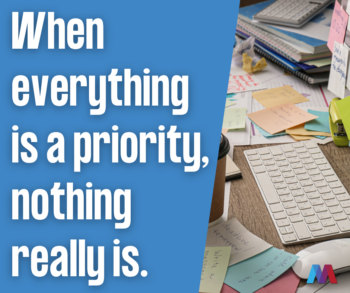
When everything is a priority, nothing really is, and that’s usually when overwhelm sets in.
So before the year-end rush takes over completely, I want to share how I help leaders get clear on what matters most.
It starts with a simple truth: busy and productive are not the same thing.
A while ago, I ran a quick poll in one of my leadership workshops. I asked a group of 20 leaders to pick their biggest time management struggle from this list:
- Goal setting
- Prioritization
- Managing interruptions
- Procrastination
- Scheduling
Half of them chose prioritization, meaning 10 capable, hardworking people were spending a big part of their week on work that wasn’t the most important work for their team.
Why prioritization is so hard for leaders
When I asked the group what was getting in the way, three reasons kept coming up.
- Constant change has made priorities blurry. After several rounds of reorganizations, new strategies and shifting goals, many of them weren’t sure what mattered most anymore.
- They rarely talk about priorities with their own manager. Without regular check-ins, they were left guessing what their leader expected from them.
- Fires and meetings were eating up their days. Between urgent issues and back-to-back meetings, there was no time left for the work that actually counted.
Maybe you see yourself in one of these, maybe in all three.
The reality is that you can’t make more hours in the day. Time is your scarcest resource.
That’s what makes prioritization for leaders so important. Your team watches where you spend your time, and they follow your lead.
How to prioritize as a leader
1. Get on the same page with your leader
Don’t wait for your manager to schedule the conversation. Book 15 minutes and ask, “What are the top three things you need from me before year-end?” Then share your own list and notice where it lines up and where it doesn’t. If your organization has been through a lot of change, this conversation matters even more.
2. Delegate more than feels comfortable
Look at your to-do list and ask yourself, “What’s on my plate that someone on my team could do, and would grow from doing?” Delegating frees up your time and develops your people at the same time.
3. Say no to meetings that don’t need you
Open next week’s calendar. Which meetings have no agenda? Which ones could you skip if someone sent you the notes? Politely declining, or sending a team member in your place, isn’t rude. It’s a decision about where your time is most needed.
4. Take five minutes every morning to plan
Before you open your inbox, ask yourself, “What’s the one thing that would make today a success for me and my team?” Block time for it. Let everything else fit around it.
The good news is that prioritization is a skill, and like any skill, it gets easier with practice.
Thank you for sharing!
If you found this article helpful, please click the links below to share it on your favorite platform.


