
The Problem With “Crucial Conversations” (And What Actually Works)
How do you feel about having a “crucial conversation”?
Does the thought of it sound scary?
Is it something that you have to psych yourself up to prepare for and deliver?
If so, I have a very helpful reframe for you!
The Reframe That Changed Everything
At an event last week, someone used the term “responsible conversations” and I had a light bulb moment!!
Suddenly, the whole idea of feedback and challenging discussions shifted in my mind.
It wasn’t about a rare, high-stakes “crucial” moment.
Rather, these conversations are about doing what’s responsible as a leader.
What Makes a Conversation “Responsible”
Responsible conversations are the ones that might feel uncomfortable but are necessary.
They help someone on your team to overcome a blind spot, learn something new or course-correct in a way that benefits them and your team.
The Cost of Avoiding Feedback
But here is what you need to remember as a leader.
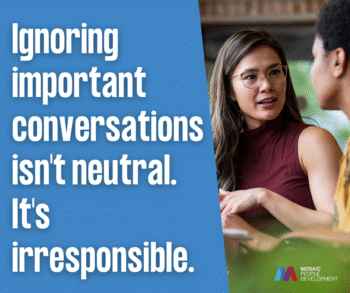
Ignoring important conversations isn’t neutral! I might be as bold as to say it’s irresponsible!
Let me give you an example.
One of my clients, let’s call her Sarah, leads a team of highly talented project managers.
One team member, Alex, is an important member of her team but he often misses deadlines.
This causes last-minute stress for the rest of the team.
Sarah could have chalked it up to “Alex’s style” and avoided the discomfort of a challenging conversation.
Instead, she had a responsible conversation with Alex in which she shared the impact of his missed timelines.
The conversation was candid but constructive. Alex had never realized how his poor planning skills impacted the other people on his team.
By the end of the conversation, he was reflective and committed to adjusting his approach.
He even asked Sarah for ongoing feedback as he experimented with new planning methods.
The team noticed a difference immediately and since Alex’s blind spot was addressed, he was able to build trust with his team once again.
Making the Shift in Your Leadership Practice
So, my suggestion is that you move from “crucial conversations” to “responsible conversations”.
This will help you to reframe feedback from a feared event to a critical part of your leadership practice.
Remember, the only reason you give feedback is for your team member’s development.
Let’s all stop avoiding feedback and start having more responsible conversations!
Are you in?