
How To Perform Under Pressure: Lessons from Pro Athletes
A few weeks ago, I had the opportunity to attend a leadership conference, and one keynote really resonated with me.
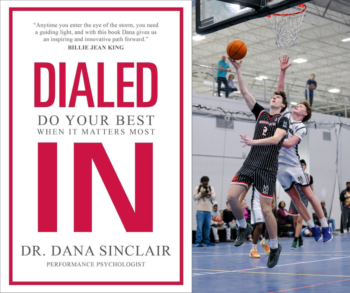
The keynote was delivered by Dr. Dana Sinclair, author of Dialed In: Do Your Best When it Matters Most. She is a performance psychologist and has a fascinating job coaching professional athletes in the NBA, NFL, MLB and many more.
Her keynote was so helpful for two reasons.
Firstly, on a personal note. You see, my 17-year-old son is a competitive basketball player, and mindset is something we talk about often both before and after games. If you’re a parent trying to support your athlete through pressure-filled moments, this one is for you.
Secondly, because I talk to leaders every day who work under tremendous pressure.
Like professional athletes, leaders are also expected to deliver under intense pressure, in real time, often with no room for error.
Leaders have to have tough conversations, make high-stakes decisions and deliver results while navigating major uncertainty. This had become the norm these days.
So, let’s talk about top performers.
What do you think separates them from others on the field or in the boardroom?
It’s not confidence!! In fact, Dr. Sinclair says that confidence is overrated.
She says that high performers don’t wait for confidence.
They focus on execution.
They don’t ask, “Do I feel ready?”
They ask, “What do I need to perform right now?”
I thought that shift from feeling to doing was so interesting.
Moving from Pressure to Process
It is inevitable that you will feel stress and pressure at work.
For example, when you get overwhelmed, you might:
- Overthink the possible outcomes
- Get caught in self-doubt
- Focus on what could go wrong
So, it is important to learn how to perform under pressure. This is a skill that you can learn.
Based on Dr. Sinclair’s research, here are three practical takeaways for you:
1.Slow Down to Lead Better.
When pressure hits, most leaders speed up. Top performers do the opposite. They slow down so they can think. Because when you’re calm, you make better decisions, you regulate your emotions and then your team will follow your lead.
2. Shift When You Drift.
This one is all about your mindset. It’s common when you are under pressure to start to worry. The key is to notice when you are shifting to negative thoughts and shift back to getting focussed on your task at hand. Ask yourself, “What is the task right now and what is the one next step I need to take?” This simple question pulls you out of your head and back into action.
3. Get “Calm-ish”.
This is my favourite Dr. Sinclair expression! I have been using the “calm-ish” mindset ever since I heard this term. Dr. Sinclair is a realist. She knows that in some situations, it is too much pressure to move into Dali Lama mode! So, she recommends that you just get yourself to a state of being “calm-ish”. You don’t need to be perfectly calm, just calm enough to think clearly. The practical tool she suggests is to take in a huge deep breath and then exhale like you’re breathing through a straw.
It sounds simple, but it works!
Dr. Sinclair offers so many other practical tips. If you are interested, I highly recommend you read her book!
Remember, pressure isn’t the problem.
It’s part of your job.
You are performing every day.
Just like elite athletes, your success doesn’t come down to how you feel in the moment.
It comes down to how well you can regulate yourself, focus your attention and execute when it matters the most.
So, the next time you feel the pressure rising…
Don’t wait until you feel confident.
Get yourself “calm-ish” and take action in a thoughtful way.
Thank you for sharing!
If you found this article helpful, please click the links below to share it on your favorite platform.