
Why Your Team Is Resisting Change (And What To Do About It)
A leader I am coaching is launching a new process that will save her team hours every week.
On paper, it is a great idea.
This process will make her teams more efficient, it will reduce their errors and really make everyone’s life easier!
But instead of excitement, she was met with silence, skepticism and comments like:
“We’ve always used the old process and it is fine.”
“This seems like a lot of extra work.”
“Can we just wait a few months? Now is not the right time. I’m so busy.”
She was so confused. She said to me, “Vanessa, I don’t get it. Why are they resisting something that’s clearly better?”
What Your Team Is Really Worried About
My answer was simple.
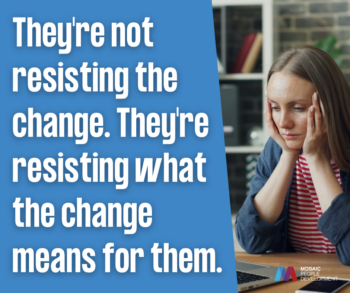
They’re not resisting the change.
They’re resisting what the change means for them.
That’s an important distinction.
As leaders, we often focus on the business benefits of a change. Our team is focused on something very different.
They’re wondering:
- Will I still be successful?
- Will this make my job harder?
- Am I expected to learn something completely new?
- What if I fail?
Resistance isn’t necessarily a sign that people are being difficult. It’s often a sign that they’re uncertain. This uncertainty is a normal human response.
So, this is what you can do to be more effective when leading a change initiative.
Instead of jumping straight into explaining what is changing, spend some time thinking about the people who will be affected by the new initiative.
Ask yourself:
- What’s in it for this person?
- What concerns or fears might they have?
- What questions are they likely to ask?
- How can I address those concerns before they become resistance?
When you take the time to answer these questions, your communication changes.
It becomes less about announcing a decision and more about helping people move through it.
Don’t Fight Resistance. Understand It.
One of the biggest mistakes leaders make is assuming that if people ask questions or push back, they’re not supportive.
In reality, most people simply need time, clarity and reassurance.
When you approach change with empathy instead of frustration, you create trust.
High trust with your team will make your change much easier to lead.
So, the next time you’re preparing to roll out a new initiative, don’t just think about the project plan.
Think about the people your change will impact.
Bring Your People With You
Successful change isn’t just about having the right strategy.
It’s about bringing your people with you.
If leading change is something you’d like to become more confident at implementing, we cover it in depth in my Lead Your People Program.
You’ll learn the three biggest barriers to change, practical strategies to overcome resistance, and you’ll build a communication strategy for one of your own change initiatives so you leave with a plan you can immediately put into action.
I’d love to have you join us. Space is limited, and registration closes August 31st, 2026.
Find out more information and register for the Lead Your People Program here.
Leading change well doesn’t just build trust with your team. It builds your own confidence too, especially when you’re the one navigating something new.
Vanessa. Guess What. I’ve accepted a job at another company as Head of Customer Service. Honestly though, I’m still using a lot of your tools from the Lead Your People Program, so really just wanted to say thank you! Your program really helped me feel confident in taking on this new, bigger role.

Marie Yatco, Head of Customer Success, Media Valet Inc
Thank you for sharing!
If you found this article helpful, please click the links below to share it on your favorite platform.