
You Don’t Have Imposter Syndrome. You’re a Leader in Learning Mode.
I have a ground rule with every new client I work with.
You are not allowed to say, “I have imposter syndrome.”
Not once. Not ever.
I’m strict about this rule because I have noticed that this concept tends to hold people back.
The term “Imposter Syndrome” was first coined in 1978 by two psychotherapists who observed that high-achieving professional women often doubted their own abilities and feared being exposed as a fraud.
Nearly 50 years later, we’re still using the term excessively.
A client of mine got a new job and she told me that she has imposter syndrome.
Another client got promoted and he told me that he has imposter syndrome.
Yet another client felt nervous preparing for a big meeting…and you guessed it…he said, “Vanessa, I have imposter syndrome.”
I’d like to take a bold stance and say that it is time to retire the term.
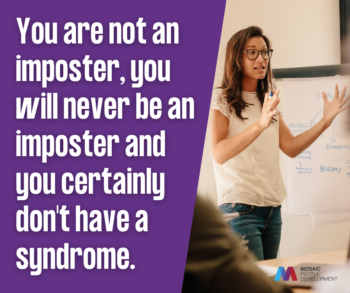
Hear me when I say: You are not an imposter. You will never be an imposter and you certainly don’t have a syndrome!!!
Why the Label Hurts More Than It Helps
Your language matters and the words you use to describe yourself shape how you see yourself.
When you say, “I have imposter syndrome,” you’re essentially reinforcing the belief that you don’t belong.
You’re treating self-doubt as a diagnosis and as something that is happening *to* you, rather than something you have the power to change.
This is exactly the problem that I see!
This label gives self-doubt a permanent home. It keeps people stuck instead of allowing them to move forward.
Try This Instead: “I Am in Learning Mode”
When I work with leaders who are feeling unsure of themselves, whether they’ve just been promoted, moved into a new role or taken on a bigger scope of responsibility, I ask them to replace “I have imposter syndrome” with something far more useful:
I am in learning mode.
This phrase more aptly describes what is actually happening.
When you step into something new, feeling nervous is normal.
Not having all the answers right away is normal.
Needing time to grow into the role is completely normal.
It doesn’t mean you’re a fraud or an imposter. It means you’re human.
Remember Why You Got the Role
You weren’t promoted or hired by accident. There is a reason you were chosen. Someone saw something in you (your track record, your potential, your character) and made a deliberate decision to put you in that seat.
So instead of spending your energy questioning whether you belong, spend it figuring out what you need to learn. Ask yourself:
- What skills do I need to develop in this role?
- Who can I learn from?
- What’s one thing I can do this week to build my confidence?
Growth often comes with growing pains and that’s not always comfortable. But by reframing the discomfort, you’re giving yourself the mental fortitude to step into this new version of yourself.
You were promoted or given more responsibility for a reason. Embrace it, feel proud of yourself and the next time you catch yourself reaching for that tired old label, swap it out for something that actually moves you forward.
Thank you for sharing!
If you found this article helpful, please click the links below to share it on your favorite platform.